Sunday, May 13, 2018

Event 2: The Construction of the "Environment" in Epigenetics Research: A Social Study


Flyer describing Pinel's talk

For my second event, I attended a talk presented by Clemence Pinel, entitled “The Construction of the ‘Environment’ in Epigenetics Research: A Social Study.” Pinel is a PhD student from King’s College London, studying the social science of epigenetics research. Her research focuses on the production of scientific knowledge, and explores the cultural, historical, and social contexts surrounding the process.

Prior to attending Pinel’s talk, I was intrigued by the idea of epigenetics research serving as the subject of a social study. Usually, the epigenetics research itself would be the study, so I was curious as to how one could study a scientific study from a social perspective. As a science major involved in research, I have attended talks in the past that have been similar in setting to this one, but wholly contrasting in subject material.  Being accustomed to the traditional presentation of a hypothesis supported by scientific data and analysis of that data, usually accompanied by numerous graphs, charts, and fluorescent images, it was interesting to see how a social sciences study and talk were structured.

Pinel presenting an interview excerpt during her talk
Pinel’s talk focused on how the environment of epigenetics and epigenetics research is conceived and constructed. She first introduced an ethnographic study she had done involving two labs: a lab studying breast cancer and another lab performing computational research on the microbiome. However, instead of focusing on the methods and results of their research, Pinel explored the physical and conceptual environments of the labs, including the opinions and motivations of their occupants. Rather than quantitative data, Pinel supported her points with analysis of relevant literature and excerpts from interviews she had conducted during her study. Particularly, one central idea forming the basis of her analysis was Stephen Hilgarten’s conception of knowledge production within the realm of “knowledge-control regimes” (Hilgarten). With knowledge as a form of their capital, scientists, in a sense, act as entrepreneurs in their pursuit of research, fitting with Bruno Latour’s conception of scientists as “wild capitalists” (Latour). Thus, tools such as collaborations are utilized by scientists as resources to enhance the environment of their research in the capitalist world it takes place in (Pinel). Pinel distilled this conceptualization of scientists and their research into three contributing factors: profitability, marketability, and versatility (Pinel).

I found Pinel’s work intriguing since it attempts to view and understand research from a different perspective. As a researcher myself, it was interesting to think about these underlying motivations and external factors surrounding and shaping the actual scientific work that is usually the center of my focus. Pinel’s work illustrates how an artistic perspective to science, and even something as niche as epigenetics research, can complement and enhance one’s understanding and execution of the work. All in all, I gained a new outlook on science and research, and the role creative analysis can play, by attending this talk. I would definitely recommend events like this one to my classmates as a way to broaden their perspectives on what they believe they already know, or introduce them to new ways of thought altogether!

Selfie with Pinel answering audience questions in the background

References

Hilgartner, Stephen. Reordering Life: Knowledge and Control in the Genomics Revolution. Cambridge, MA, MIT Press, 2017.

Latour, Bruno. Science in Action: How to Follow Scientists and Engineers Through Society. Cambridge, MA, Harvard University Press, 1987.

Pinel, Clemence, Prainsack, Barabara, McKevitt, Christopher. “Searching for ‘Amazing Data’: Ethnography of an Epigenetic Research Laboratory.” Epigenomics of Common Diseases Conference 2016, Cambridge, UK, 2016.

Unit 6: BioTech + Art


The fusion of biotechnology and art is a burgeoning field, but also a controversial one due to its subject matter – life itself. Biotechnological techniques are applied to manipulate living beings, transforming them into the artistic medium and calling into question what the essence of life truly is.

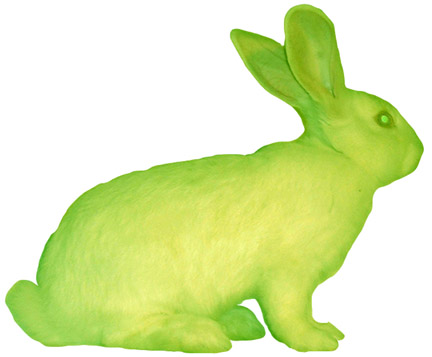
Alba, the "GFP Bunny"
A prominent example of this approach is Eduardo Kac’s “GFP Bunny,” a pioneer of the new art form he terms “transgenic art” (Kac). As someone who utilizes transgenic techniques for scientific research, I am conflicted over the idea of transgenic art. I also work with GFP, primarily as a visualization method, so the concept of engineering this gene into an animal for purely creative purposes seemed a bit senseless. Genetic engineering is a controversial topic, perceived as tinkering with what nature intended and manipulating the existences of living beings. When applied towards artistic aspirations rather than practical applications, the implications can quickly veer into dangerous territory. How much tinkering is too much, and are we “playing God” with lives? However, Kac stresses that his artwork goes beyond its genetic makeup, exploring its social and cultural implications (Vesna). In this way, the purpose of his work is similar to those deemed more conventional – to challenge the way we perceive and understand the world, in this case our “accepted classifications of life” (Levy 2).

Painting depicting fears about genetic engineering
Kathy High with one of her rats
In utilizing biotechnology to create art, some pieces seem to blur the lines between science and art. Kathy High’s “Rat Laughter” reminded me of a research paper that also analyzed ultrasonic sounds from rats (Hsiao). In a way, High’s piece could also be viewed as a scientific study examining the associations between rat vocalization and emotion. However, High also challenges scientific conventions through her piece “Embracing Animal” (High). I was surprised by the way she interacted with her subjects, treating lab rats as more than mere tools of science. By empathizing and even identifying with the rats, High brings a new perspective to our perception of and relationship with lab animals.

As contentious and dubious biotechnological art can be, it can also be extremely valuable for its capacity to change our perceptions. As Chris Kelty implies, “creativity breeds creativity.” and such “outlaw biology” can inspire greater public understanding of and participation in science (Kelty). As long as we ensure that precautionary restrictions and guidelines are in place, this potent pairing has the power to expand our artistic and scientific horizons.

References

High, Kathy. “Embracing Animal.” Kathy High, http://kathyhigh.com/video-embracing-animal.html. Accessed 13 May 2018.

High, Kathy. “Rat Love Manifesto.” Embracing Animal, http://www.embracinganimal.com/ratlove.html. Accessed 13 May 2018.

Hsiao, Elaine Y., et al. “Microbiota Modulate Behavioral and Physiological Abnormalities Associated with Neurodevelopmental Disorders.” Cell, vol. 155, no. 7, 2013, pp. 1451-1463.

Jameson, Errol. “Genetic Engineering.” FineArtAmerica, https://fineartamerica.com/featured/genetic-engineering-errol-jameson.html. Accessed 13 May 2018.

Kac, Eduardo. “GFP Bunny.” Kac Web, 2000, http://www.ekac.org/gfpbunny.html#gfpbunnyanchor. Accessed 13 May 2018.

Kac, Eduardo. “Alba, the fluorescent bunny.” Kac Web, 2000, http://www.ekac.org/albagreen.jpeg. Accessed 13 May 2018.

Kelty, Chris. “Meanings of Participation: Outlaw Biology?” Jcom, vol. 9, no. 1, 2010, pp. 1-8. 


Levy, Ellen K. “Defining Life: Artists Challenge Conventional Classifications.” Chicago, IL, Intellect, 2011.

Vesna, Victoria. “Biotechnology and Art.” YouTube, uploaded by uconlineprogram, 18 Sept 2013, https://www.youtube.com/watch?v=PaThVnA1kyg.

Sunday, April 29, 2018

Unit 4: Medicine + Technology + Art

Patient entering MRI machine
As a life sciences major, I have learned about medical technologies like MRI or CAT scans numerous times. However, I had always thought of these techniques as diagnostic tools, to be used for the sole purpose of examination and identification, rather than forms of art. While it is true that MRIs enable us to view the body precisely and detect abnormalities from a scientific perspective, in a way, the process also allows for a new way to visualize and perceive the human body. Moreover, as Silvia Casini describes, the experience of undergoing an MRI scan can be an art form itself. I had never considered this aspect of medical procedures before, but an MRI scan does not just simply give one diagnostic results; it also immerses its subject in a wholly distinctive sensory experience and enables one to see inside oneself, truly becoming “a portrait” (Casini 99).
Orlan undergoing surgery

This idea of utilizing medicine as not just a mode, but a tool, of art is taken to a new level by the artist Orlan. While I was not surprised by the idea of cosmetic surgery as an artistic method to reshape and sculpt the human form, I was taken aback by the ways in which Orlan stretches the limits of this concept. She utilizes her own body as her medium, to the extent of making unalterable physical modifications to her form in order to express the artistic messages of such forms. Orlan’s tactics reminded me of Casini’s observation that MRI scans help us reconsider the question of “what defines us as humans?” (Casini 75). Manipulating the way we appear and view ourselves gives us new insights into our conception of what comprises not only the human form, but also human identity.

In this way, medicine does not only complement art; it is also an art itself. Even the Hippocratic Oath that is so highly esteemed in the medical field recognizes this relationship, declaring “there is art to medicine as well as science” (Tyson). Indeed, although life, at both the molecular and systemic level, follows a distinct set of rules, these rules are not dissimilar to patterns found in art forms such as architecture (Ingber). When you truly think about the medical practice, it is not a set of scientific protocols; rather, taking on such a role at the interface of advancing knowledge and caring for human beings requires a degree of artistry.
The Art of Medicine


References


Casini, Silvia. “Magnetic Resonance Imaging (MRI) as Mirror and Portrait: MRI Configurations between Science and the Arts.” Configurations, vol. 19, no. 1, 2011, pp. 73-99.

Cleev. “The Art of Medicine.” Deviantart, https://cleev.deviantart.com/art/The-Art-of-Medicine-574781410. Accessed 29 April, 2018.

Ingber, Donald E. “The Architecture of Life.” Scientific American, vol. 278, no. 1, 1998, pp. 48-57.

“MRI scan.” Netdoctor, http://netdoctor.cdnds.net/15/45/980x490/landscape-1446743973-g-examinations493216409.jpg. Accessed 29 April 2018.

Orlan. Carnal Art. YouTube, uploaded by MutleeIsTheAntiGod, 13 Mar 2011, https://www.youtube.com/watch?v=no_66MGu0Oo.

“The Artist Who Surgically Modified Her Body To Condemn Our Beauty Standards.” Cultura Colectiva, https://culturacolectiva.com/art/artist-plastic-surgery-beauty/. Accessed 29 April 2018.

Tyson, Peter. “The Hippocratic Oath Today.” NOVA. PBS, 27 Mar 2001, http://www.pbs.org/wgbh/nova/body/hippocratic-oath-today.html. Accessed 29 April 2018.

Vesna, Victoria. “Human Body & Medical Technologies.” YouTube, uploaded by uconlineprogram, 21 April 2012, https://www.youtube.com/watch?v=Ep0M2bOM9Tk.

Sunday, April 22, 2018

Event 1: Metaphors on Vision: Films by Stan Brakhage

I attended Metaphors on Vision, a screening of films by Stan Brakhage. An important figure in experimental film, Brakhage challenged the standards of film techniques as well as vision itself, utilizing film to breach topics including fear, religion, sex, and death. Through his work, he wanted to create the ability to see the unseen, strip our vision of labels and learned understanding, to “transcend the original physical restrictions and inherit a world of eyes.” (Brakhage).

Though I was prepared to experience something unfamiliar and perhaps unsettling, I was taken aback by how far Brakhage went in his attempts to challenge our ideas of visual perception. First, his films were completely silent. The absence of sound made me realize how much our usual film experience relies on it. Instead, Brakhage’s films confine viewers to their sense of sight alone, pinpointing their focus and compelling them to lose themselves in the visual world before their eyes. The slightest details and motions in his films thus have a more distinctive impression and effect. Anticipation of the Night was the longest film shown. The most apparent technique employed was the repetition of images, interspersed with jarring cuts. Playing with this repetition, alteration, and reversal of images, Brakhage immerses his viewers in a completely novel visual experience. I was intrigued by how he was able to utilize this manipulation of what we see to create a new idea of perception. I also noticed how Brakhage played with light and shadow, particularly in a sequence of amusement park lights that included a fractal-like pattern formed by a ferris wheel (Brakhage). This reminded me of how mathematical concepts can take on a different context and visual complexity to bestow meaning within art.

Thigh Line Lyre Triangular 
depicted the process
Flashes of color during Thigh Line Lyre Triangular
of childbirth in graphic and jarring fashion. The birth depicted in this film was actually of Brakhage’s own child (Barr). His personal connection to this film elucidates its emotional rawness and intensity, expressed through shaky camera movements and flashes and bursts of color. Brakhage is able to illustrate this biological, scientific process of childbirth in a way that allows the viewers to experience its vigor organically along with the family in the room. 


Though this experience was more startling than I expected, I appreciated how Brakhage was able to challenge our typical understanding of vision and introduce a new way to see, indeed creating his own metaphors on vision.


Image of Metaphors on Vision by Stan Brakhage

References

Anticipation of the Night. Directed by Stan Brakhage, 1958.

Barr, William R. "Brakhage: Artistic Development in Two Childbirth Films," Film quarterly: forty years, a selection, University of California Press, 1999, pp. 536-541.

Brakhage, Stan. Metaphors on Vision. Anthology Film Archives, 2017.

Thigh Line Lyre Triangular. Directed by Stan Brakhage, 1961.

Unit 3: Robotics + Art


The influence technological advancement has had on human art and life is indisputable. It is interesting to consider, however, that the initial reaction to industrialization was one of apprehension. The idea that mechanization would drain the essence from mans’ art and life, and even threaten human existence itself, is not uncommon. Walter Benjamin captures this sentiment, claiming “even the most perfect reproduction of a work of art is lacking in one element: its presence in time and space” (Benjamin 1). Benjamin argues that mechanization diminishes the value and meaning of art by stripping away this presence, what he terms its “aura” (Benjamin 1).
Ford assembly line

In the times of Gutenberg’s printing press, Ford’s Model T, and assembly lines, it is easy to see how the focus on streamlined processes and rote, repetitive mechanisms seemed to indicate a bleak future where the material reigns supreme. However, rather than destroying the humanity within life, this increased efficiency of creation and dissemination instead revitalizes and propels it. For instance, although the printing press might make the production of a book a mechanical, lifeless process, mass-producing the work allows its words and messages to reach more ears. Douglas Davis expresses this idea, redefining the “aura” of art as residing “not in the thing itself but in the originality of the moment when we see, hear, read, repeat, revise” (Davis 386). The meaning of art does not lie in its physical state and authenticity, but in the emotions and actions it evokes in those who interact with it.


Microbots being used in an attack
The fears of industrialization infringing on human life also translate to robotics. Works like Mary Shelley’s Frankenstein express the eeriness and danger of these mechanized versions of humans, the fear that they may rise up to overtake their human creators. However, as Machiko Kusahara mentioned, this threatening depiction is less prevalent in Japan, where robots are portrayed as friends to humans. The film Big Hero 6 captures this conflict in our evolving conceptualization of robots. Hiro’s microbots represent the immense potential robots can have in improving our lives through areas like architecture and infrastructure. However, in the wrong hands, they can be used for more nefarious purposes. Similarly, Baymax embodies the positive role robots can take as our friends and companions, crossing the line between man and machine. In this way, similar to art, the significance robots will take on relies on how humans capture and interpret their potential.
Baymax from Big Hero 6

References

“Baymax.” Wikipedia, https://upload.wikimedia.org/wikipedia/en/thumb/2/2c/Baymax_from_Disney%27s_Big_Hero_6.png/220px-Baymax_from_Disney%27s_Big_Hero_6.png. Accessed 22 April 2018.

Benjamin, Walter. “The Work of Art in the Age of Mechanical Reproduction.” Germany, 1936.


Big Hero 6. Directed by Don Hall and Chris Williams, Walt Disney Animation Studios, 2014.

Davis, Douglas. “The Work of Art in the Age of Digital Reproduction.” Leonardo, vol. 28, no. 5, 1995, pp. 381-386.

“Ford River Rouge Plant.” History, https://cdn.history.com/sites/2/2014/01/Ford_river_rouge_plant-P.jpeg. Accessed 22 April 2018.

Kusahara, Machiko. “Robotics MachikoKusahara 1.” YouTube, uploaded by uconlineprogram, 14 April 2012, https://www.youtube.com/watch?v=xQZ_sy-mdEU.

Vesna, Victoria. “Robotics Lectures.” YouTube, uploaded by uconlineprogram, 15 April 2012, https://www.youtube.com/watch?v=cRw9_v6w0ew.

“Yokai Big Hero 6.” Pinterest, https://i.pinimg.com/originals/d5/7e/fc/d57efce1130df3bf958aeff86a8c2d3d.gif. Accessed 22 April 2018.